Finding the right refrigerated storage sounds straightforward until you put real product on the line. One degree too warm and your strawberries collapse two days early. One degree too cold and your emulsified sauces break, your nutraceutical gels crystallize, or your vaccine inventory violates a label claim. The margin for error shrinks further when you add transit time, fluctuating dock temperatures, and weekend staffing. Selecting the correct temperature range is the first decision that ripples through shelf life, safety, regulatory compliance, and cost.
I manage temperature-controlled storage for clients that ship everything from bakery pre-proofs to seafood and biomedical kits. I have seen a perfectly clean facility fail a product, and an older cold room protect inventory flawlessly. The difference was almost always a matter of temperature discipline, airflow, and handling practices around that chosen setpoint. If you are searching for refrigerated storage near me, or assessing a cold storage warehouse in San Antonio TX or any other hot, humidity-heavy market, the following framework will help you match temperature to product, facility type to your risk profile, and budget to operational reality.
The cold chain is not one temperature
Refrigeration gets sliced into several operating bands, each suited to distinct product chemistries and safety profiles.
- Chill or cool storage, typically 33 to 41°F (0.5 to 5°C), covers most fresh produce, dairy, deli meats, and beverages. Cold storage or deep chill, often 28 to 32°F (-2 to 0°C), fits close-to-freezing items such as certain fish, doughs, and meats that benefit from subfreezing brine points but must not freeze solid. Frozen, usually 0°F (-18°C) or colder, stabilizes microbial growth and slows oxidation for months, used for proteins, vegetables, desserts, and prepared meals. Ultra-low, -58 to -108°F (-50 to -78°C), and cryogenic, -148°F (-100°C) and below, serve laboratory materials, some pharmaceuticals, and specialized ingredients.
Those bands look neat on paper. In practice, each product has a narrower comfort zone, plus an intolerance for temperature swings. A small oscillation around a stable setpoint usually hurts less than daily cycles that sweep several degrees during loading and pull-down.
What you are actually protecting
Pick the temperature range by what you want to preserve, not just by what the warehouse can offer. The main failure modes tend to be enzymatic activity, microbial growth, moisture migration, lipid oxidation, texture damage from ice crystal formation, and packaging failure due to condensation or differential pressure.
A few concrete scenarios:
- Leafy greens: They want 33 to 36°F with high humidity. If you compromise to 38 to 40°F to suit mixed goods, you cut shelf life by as much as 20 to 30 percent. Put them near a door that cycles every 10 minutes and you will notice yellowing along the ribs within 48 hours. Fresh fish fillets: The sweet spot sits just above their freeze point, commonly around 30°F, varying by species and brine content. At 34 to 36°F, they still keep, but drip loss creeps up and odor develops faster. Chocolate and confectionery: Aim for 55 to 65°F with tight humidity control, not a standard cooler. Repeated drops below 50°F and rises above 70°F cause fat bloom and sugar bloom, ruining the finish without making the product unsafe. Probiotic beverages: Many labels call for 34 to 38°F. A two-day detour at 42°F during transit can cut viable counts below claims even if the product still tastes fine. Vaccines and biologics: Label storage is often 36 to 46°F, but excursions matter. The facility must demonstrate mapping, calibrated monitoring, and clear alarm protocols.
That nuance explains why a generic refrigerated storage search can deliver options that are too broad. If your product has narrow tolerances or high value per pallet, a temperature-controlled storage partner with discrete rooms will outperform a vast single-zone box with great rates.
The anatomy of a reliable cold storage warehouse
When you tour a cold storage warehouse near me, you can spot reliability in a few minutes if you know where to look. Forget the glossy brochure. Focus on physical clues and process discipline.
I start with door cycles and dock design because that’s where most heat load sneaks in. A good refrigerated storage operator isolates the dock with vestibules or dock seals, stages loads in a tempering area, and uses fast-roll doors or strip curtains inside. If they keep a cooler door open for convenience, the rest of their controls likely drift as well. Look at floor frost patterns near doors. Uneven frost mats or a ring of condensation indicates poor airflow or infiltration.
Next, review data. Ask for the last 30 days of temperature logs for the exact room you will use. You want to see small oscillations, not sawtooth patterns. A cycle of 34 to 36°F overlaid with defrost events is normal. A swing from 33 to 42°F every afternoon is a red flag. Confirm that sensors are NIST-traceable and that calibrations are logged at least annually. Facilities that manage pharmaceuticals tend to calibrate twice a year or more, and they run thermal mapping studies before adding racking or changing load patterns.
Walk the aisles and feel the airflow. Consistent gentle movement is better than gusts. Stagnant corners behind columns are bad for mixed pallets with warm cores. In deep chill rooms, I look for deck fans or baffles that push air through rather than over pallets.
Power redundancy matters. San Antonio’s grid is stable, but storms can knock out a single feeder. If a cold storage warehouse San Antonio TX operator has no generator, ask about their plan. How long to warm by 10 degrees if power fails? Two to four hours is common for a medium room if heavily loaded. A diesel generator with automatic transfer buys time, but fuel delivery during a regional event becomes the next risk. Some operators mitigate with CO2 snow for short-term protection, or with blast tunnels that double as emergency refuges when idle.
Finally, people. Watch receiving. Do they temp every inbound pallet that requires it? Are reject criteria posted and used? If the receiving clerk walks a product in without a probe or surface scan when the bill of lading calls for 34 to 36°F control, your product will not be the exception.
Matching product to range, with trade-offs
Most businesses land in one of three buckets from a temperature standpoint: mixed food and beverage, heavy protein and frozen, or specialized goods like pharma and high-end confectionery. Each comes with compromises.
Mixed food and beverage prefer a 34 to 38°F zone so produce, dairy, and beverages can share space. The trade-off is that you may give up ideal humidity for leafy greens or precise stability for fermented items. If your turnover is fast, the compromise works. If you warehouse for 3 to 6 weeks, the losses add up.
Protein-focused operations benefit from deep chill at 28 to 32°F plus ample frozen space. Many warehouses in Texas built for meat have great subzero rooms but noisy evaporators and dry conditions in the cooler. Fine for vacuum-packed beef, not for a crate of berries you squeezed in. You will save on pallet rates but pay in shrink.
Specialized goods need narrow, stable bands. A chocolate maker storing finished bars through summer wants 60 to 65°F at 45 to 50 percent RH. Those rooms are costly per square foot, so many operators do not offer them unless demand is steady. If you try to shoehorn chocolate into a standard refrigerated storage san antonio tx cooler, you will fight bloom all season.
How local climate shapes the choice, especially in San Antonio
Humidity and heat define the game in San Antonio from May through September. A cold storage warehouse near me in that region faces large moisture loads whenever doors open. Moisture turns into frost, clogs coils, and forces frequent defrost cycles. Each defrost bumps the room temperature unless the system is oversized or the operator staggers cycles.
If you must stage outbound orders during afternoon heat, choose a facility with an intermediate temperature-controlled storage room at roughly 50 to 60°F. This buffer prevents condensation shock when warm air meets cold packaging. It also reduces defrost frequency inside the main cooler. Facilities that advertise temperature-controlled storage San Antonio TX but only have a single large cooler and a hot dock will struggle on peak days.
On the other hand, winter mornings can dip low enough that uninsulated dock areas create cold sink zones. That might not sound bad until fragile goods near the dock freeze at the surface. Insulated curtain walls and consistent staging fix this.
Don’t ignore humidity and air speed
Temperature is half the story. Humidity and airflow govern evaporation, texture, and ice formation. High humidity, around 85 to 95 percent, keeps leafy greens crisp but is terrible for corrugated integrity if condensate forms. Low humidity, 50 to 65 percent, protects packaging and chocolate but dries exposed produce. Air speed should be enough to keep uniformity without stripping moisture from unwrapped products.
Ask your operator what humidity they can hold and how they measure it. In many large rooms, humidity sensors are sparse. You can supplement with product-level loggers in your own loads to see the microclimate around your skus.
Pallet density, stacking, and the myth of “more cold is better”
Overstacking kills cold. A perfect 34°F room cannot pull down a warm pallet buried inside a tight block. I have seen 70°F product cores sit above 45°F for 16 hours because the pallets touched on all sides. A simple rule helps: always leave at least two inches of clearance between pallets and the wall, and one pallet width of cross-aisle breathing space every three to four positions. If the warehouse charges by slot, negotiate for density with airflow, not density that suffocates your load.
Going colder than the spec rarely helps either. Many beverages tolerate 33°F, but put them at 31°F and a pallet near a coil can partially freeze. Emulsions separate, paper labels wrinkle, caps leak after thaw. The safest setpoint is often one to two degrees inside the acceptable range, then hold it steady.
Monitoring: trust, but verify
Modern temperature-controlled storage should provide live or near-live telemetry. At minimum, you want room-level monitoring, calibrated probes, and alarm thresholds that alert staff before your product crosses a critical limit. Better operators offer zone-level or rack-level sensors, plus historical downloads.
For high-value or sensitive goods, use your own data loggers inside pallets. Button loggers cost little and show product core behavior through door cycles and defrosts. When a claim arises, room data and in-product logs together tell the story. I have resolved many disputes with a simple graph showing that room air rose to 41°F for 15 minutes while product cores stayed at 36 to 37°F. No loss, no drama.
Regulatory overlay: food vs. pharma vs. specialty
Food safety focuses on preventing temperature abuse that supports pathogen growth. For ready-to-eat meats and dairy, that means staying below 41°F per FDA Food Code guidance. For frozen foods, maintain 0°F or below to control quality and prevent thaw-refreeze cycles. Documentation needs to show continuous control, corrective actions, and employee training.
Pharmaceuticals bring GDP, cGMP, and validated processes. The warehouse should present mapping studies, deviation handling, CAPA records, and change control on equipment. If a facility claims experience with biologics, ask to see a sample validation protocol. Be wary of a cold storage facilities operator who treats drug products like yogurt with a different label.
Specialty goods like chocolate and nutraceuticals fall between. There may be no regulatory requirement for 60°F rooms, but your brand’s shelf-life claims depend on it. A quality agreement with the warehouse, plus solid monitoring, fills the gap.
Cost realities and what drives your rate
Rates vary widely. In San Antonio, a basic refrigerated pallet might run 14 to 22 dollars per month for standard cooler storage, with handling fees of 4 to 8 dollars in and out, depending on volume and service level. Deep freeze runs higher, often 18 to 28 dollars per pallet per month. Specialized rooms, like 60°F with dehumidification, can climb beyond 30 dollars per pallet.
Factors that move the needle:
- Temperature stringency and room type. Dedicated rooms cost more than mixed zones. Turn frequency. Lots of touch points increase handling charges. Seasonality. Summer surcharges cover energy spikes and labor demand. Value-added services. Case picking, labeling, kitting, and QC sampling add labor hours. Data and compliance. GDP-compliant documentation and audits add administrative overhead.
If a rate seems low, ask what is included. Cheaper storage sometimes hides costly access fees, off-hour charges, or penalties for short dwell times.
Practical steps to pick the right range and partner
When you evaluate cold storage near me, a short, structured approach helps you avoid common traps.
- Define product temperature and humidity requirements at the SKU level. Pull specs from suppliers, not memory. Map your process from inbound to outbound. Identify where the load spends time outside ideal conditions, such as on a warm dock or in a packed staging lane. Size the buffer. If the cold room runs at 35°F, plan for a dock room at 50 to 60°F during summer to prevent condensation, especially on foil and glass. Stage by temperature. Do not store chocolate beside lettuce just because the pallets fit. Mixed loads often cost more in shrink than you save in rent. Instrument everything. Use room data from the warehouse and product loggers in your pallets.
This is the only list in this article. Everything else belongs in conversation with your operator and your quality team.
A quick note on “near me” searches in a hot market
Near me is not only about miles. In a city like San Antonio, being 10 miles closer sometimes saves no time if that facility lacks efficient docks or has long appointment windows. Door availability, turn times, and the operator’s appointment discipline often trump distance. If your carrier waits two hours for a door in August heat, the extra dwell on a hot trailer can undo a perfectly tuned cooler setpoint.
For businesses with daily throughput, look for a cold storage warehouse near me that posts same-day appointment slots and proves yard management competence. If you need weekend access, confirm staffing and after-hours procedures in writing. Many facilities claim 24/7 but run skeleton crews that cannot handle issues quickly.
Case snapshots from the field
A beverage brand kept its functional drinks at a cold storage warehouse San Antonio TX facility in a mixed 34 to 38°F cooler. Summer dock doors faced west. Afternoon defrosts coincided with heavy outbound volume, and case labels began peeling. The fix was not a different temperature setpoint. We added a 55°F staging room and shifted picks there two hours before truck arrival. Defrost schedules were staggered, and airflow baffles were installed over the highest-traffic aisle. Label failures vanished, with no change to the main cooler’s temperature.
A seafood importer stored fillets labeled “keep at 30 to 32°F” in a standard 36°F room for three days each week. Complaints of drip and smell followed. Moving the product to a dedicated deep chill at 30°F cut claims by 60 percent in the first month. The rate per pallet rose by 6 dollars, but cold storage warehouse San Antonio TX spoilage reduction saved thousands.
A confectionery maker tried refrigerated storage san antonio tx space at 38°F to avoid investing in a 60°F room. Summer bloom showed up on 9 percent of bars. A switch to a small 60 to 62°F, 50 percent RH room with strict door discipline dropped defects to below 1 percent. They paid roughly 35 percent more per pallet but cut write-offs by far more.
What to ask on your first call
Most initial conversations sound the same. Shake it up with specifics that force clarity. Ask for temperature logs from the exact room you would use, for the last three months. Request their defrost schedule and how they manage defrost during peak shipping windows. Ask how they validate probe calibrations and how often. Ask for a map that shows sensor locations, doorways, and airflow patterns.
Then present your products with their exact requirements, including humidity and maximum allowable excursion times. If you have a mixed portfolio, propose two or three rooms and ask for a bundled rate. Push for a brief trial with enhanced monitoring before committing long term. A good operator will welcome the chance to prove control.
Building resilience into your plan
Even the best-controlled rooms face odd days. A compressor trips, a storm takes out a feeder, or a truck arrives four hours late. Plan for resilience.
Store high-risk items closer to evaporators where stability is greatest, but not so close that they freeze when the coil cycles. Pre-chill packaging for goods sensitive to condensation so the first layer of air they meet does not dump moisture. Keep spare data loggers charged and labeled by SKU. Build a decision tree for excursions that includes who to call, how to quarantine, and what temperature/time combinations trigger disposal.
If your operation depends on a single refrigerated storage location, identify a secondary temperature-controlled storage partner in the same metro. In San Antonio, having a backup facility 20 to 30 minutes away can save a load during a localized outage. Negotiate a standby agreement before you need it.
When to choose multi-room precision versus a single flexible cooler
A single large cooler suits high-turn inventories with similar requirements and low sensitivity to short spikes, like beverages, sealed produce, and dairy. It keeps rates low and simplifies operations.
Multi-room precision shines when you carry varied SKUs with divergent needs or when each unit is valuable. The cost per pallet rises, but shelf life and brand protection improve. Split your portfolio: deep chill for fish and dough, 34 to 36°F for dairy and produce, 60 to 65°F for chocolate and supplements. If your volume fluctuates, look for a facility that can adjust room sizes with demising walls and flexible evaporator control.
A few words on technology without the buzz
Tech helps, but only when it tightens discipline. Useful tools include wireless sensors with five-minute intervals, server-backed alarms with on-call rotas, and electronic SOPs tied to QR codes on doors. Blast chillers that can also run as buffers provide emergency options. Sophisticated control systems that shift defrost timing based on door events cut warm spikes. None of this replaces a manager who walks the rooms at shift change and touches the pallets.
The bottom line on choosing the right temperature range
Start with the product’s scientifically grounded range, then aim for the middle of that band, not the edge. Validate that the facility can hold it with minimal swing during real operations, not just empty-room tests. Fit humidity and airflow to the product, not to convenience. Use data to confirm that the advertised range is what your product actually experiences in the rack. In warm, humid markets like San Antonio, add a staging buffer and pay attention to docks and defrosts.
If you align these elements, the phrase cold storage near me becomes more than a search term. It becomes a reliable link in your supply chain, one that protects taste, texture, potency, and brand trust. The right temperature range is the anchor, but discipline around that setpoint is what makes the difference between acceptable and excellent.
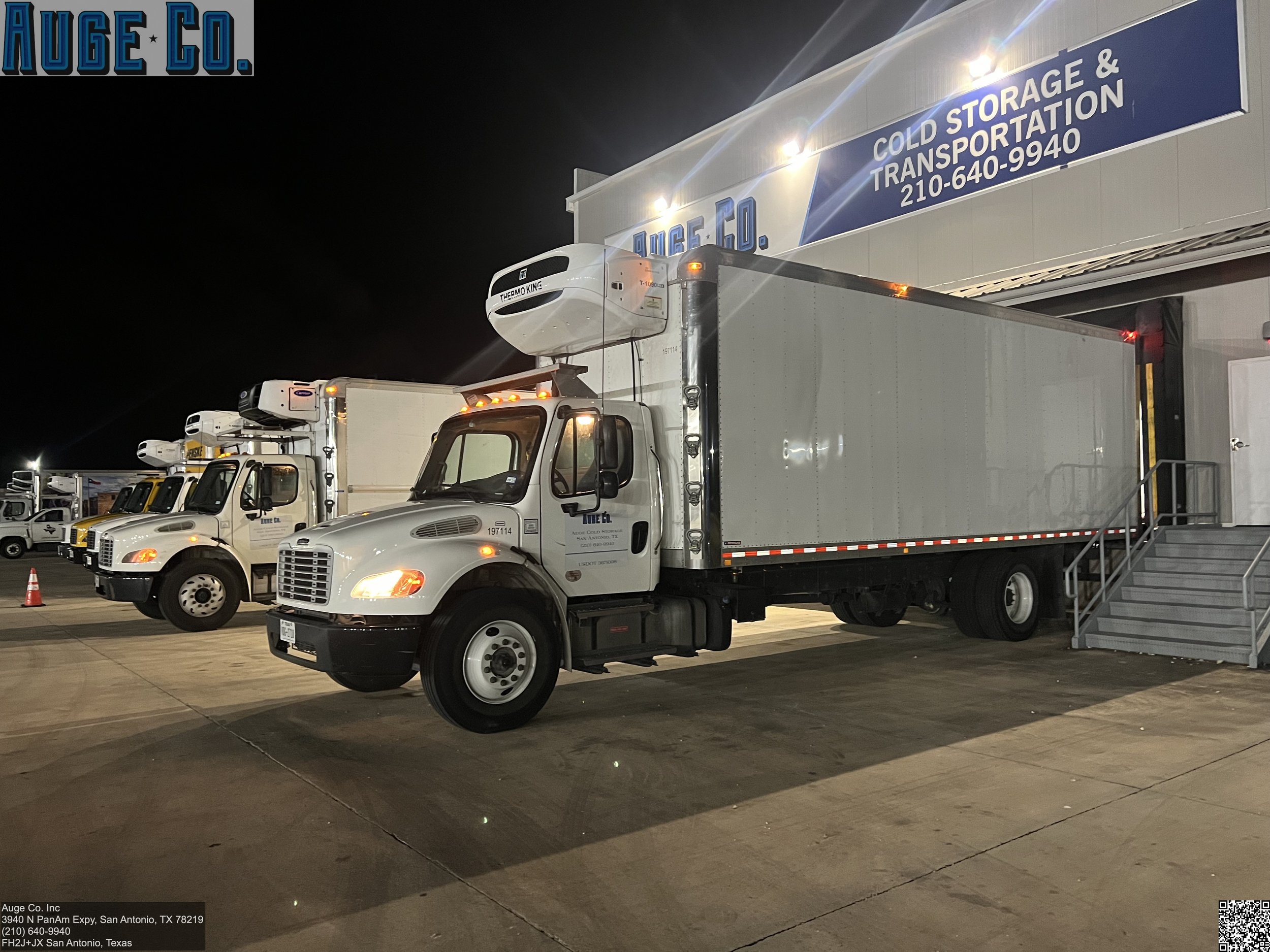
Auge Co. Inc 3940 N PanAm Expy, San Antonio, TX 78219 (210) 640-9940 FH2J+JX San Antonio, Texas